WORKS
OpenAI Codex Student Builder Fest 2026
September 2026
TableCast
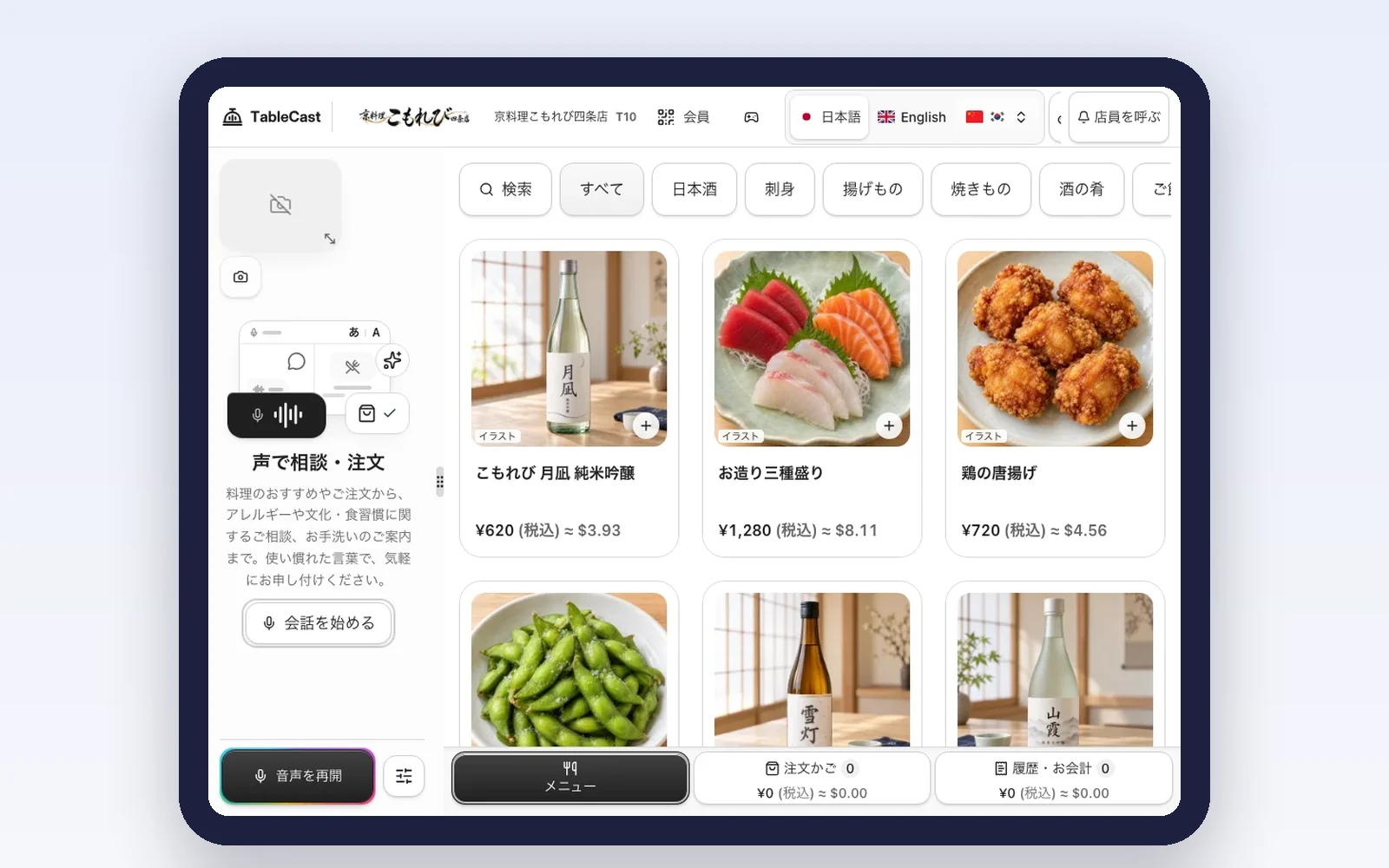
A system for restaurants that lets customers pick dishes by talking to a tabletop iPad, and order right away.
- Hackathon
- OpenAI Codex Student Builder Fest 2026 (September 2026)
- Team
- Team of 4
Background
You have questions, but the staff look too busy to ask.
Ingredients, a drink to go with the food, how to eat a dish. With TableCast, customers can ask the iPad on their table. Dishes chosen in conversation go into the same cart as touch input, so they can switch to the screen and keep ordering.
Features
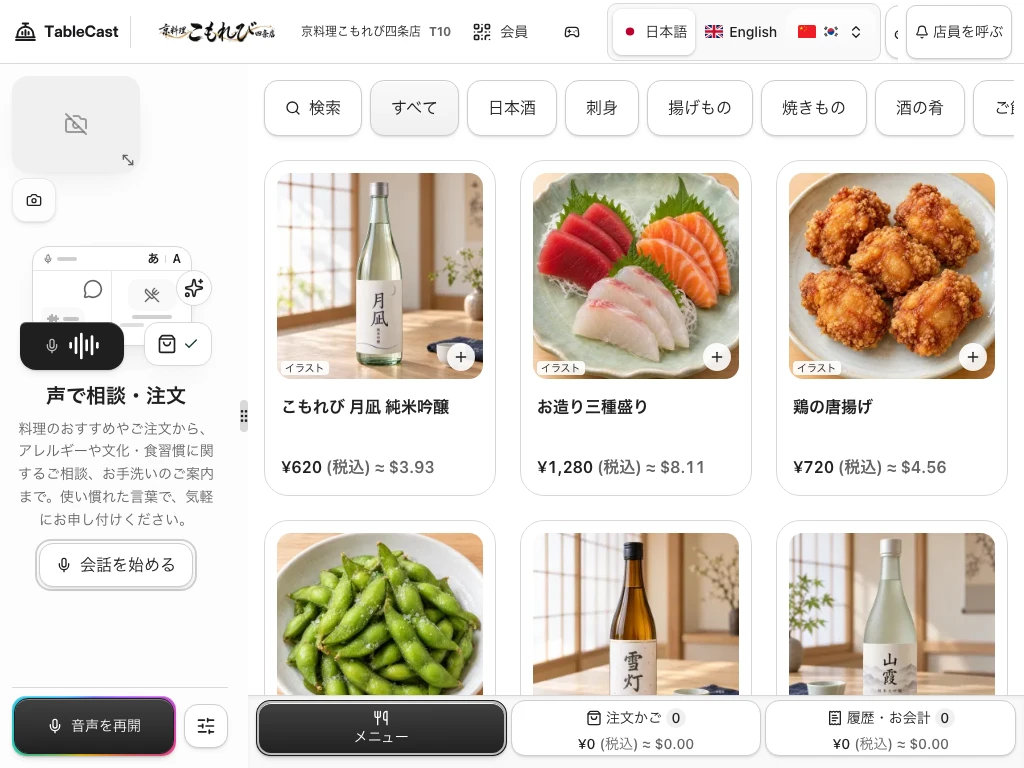
01
Talk it through, then order
Customers can ask about dishes and drinks by voice, in several languages. Dishes they choose go into the same cart as touch input. There is also a button to call the staff.
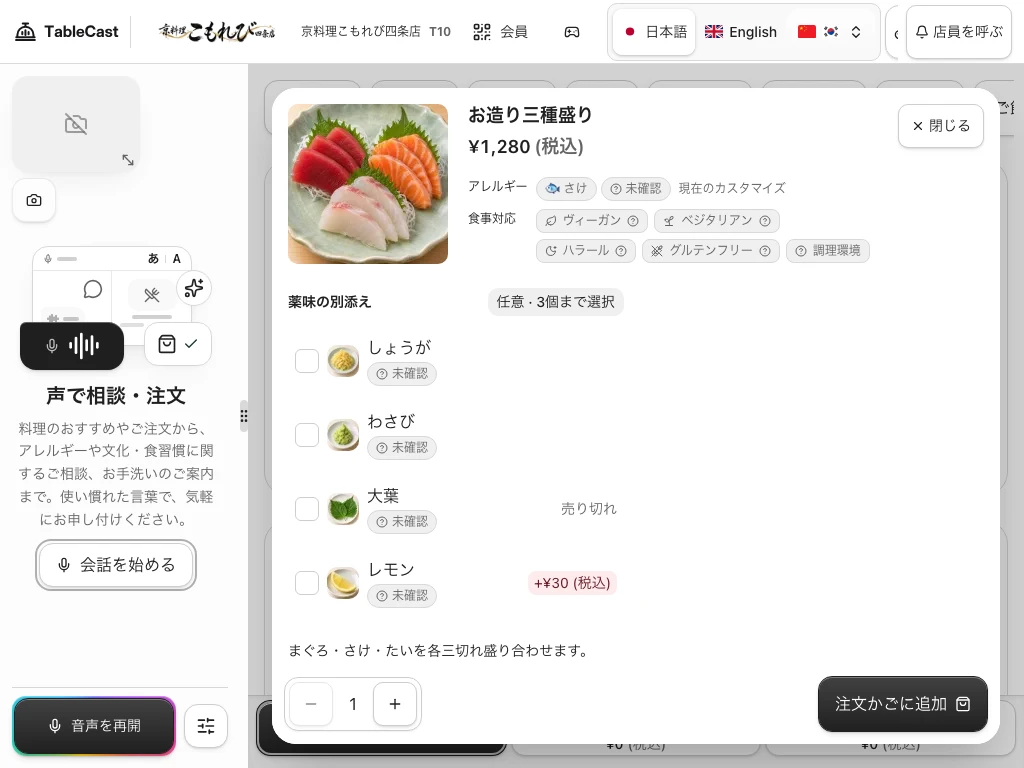
02
See the photo, make it your way
Customers choose while looking at photos of the menu and customize dishes to their taste. They check the order before placing it.
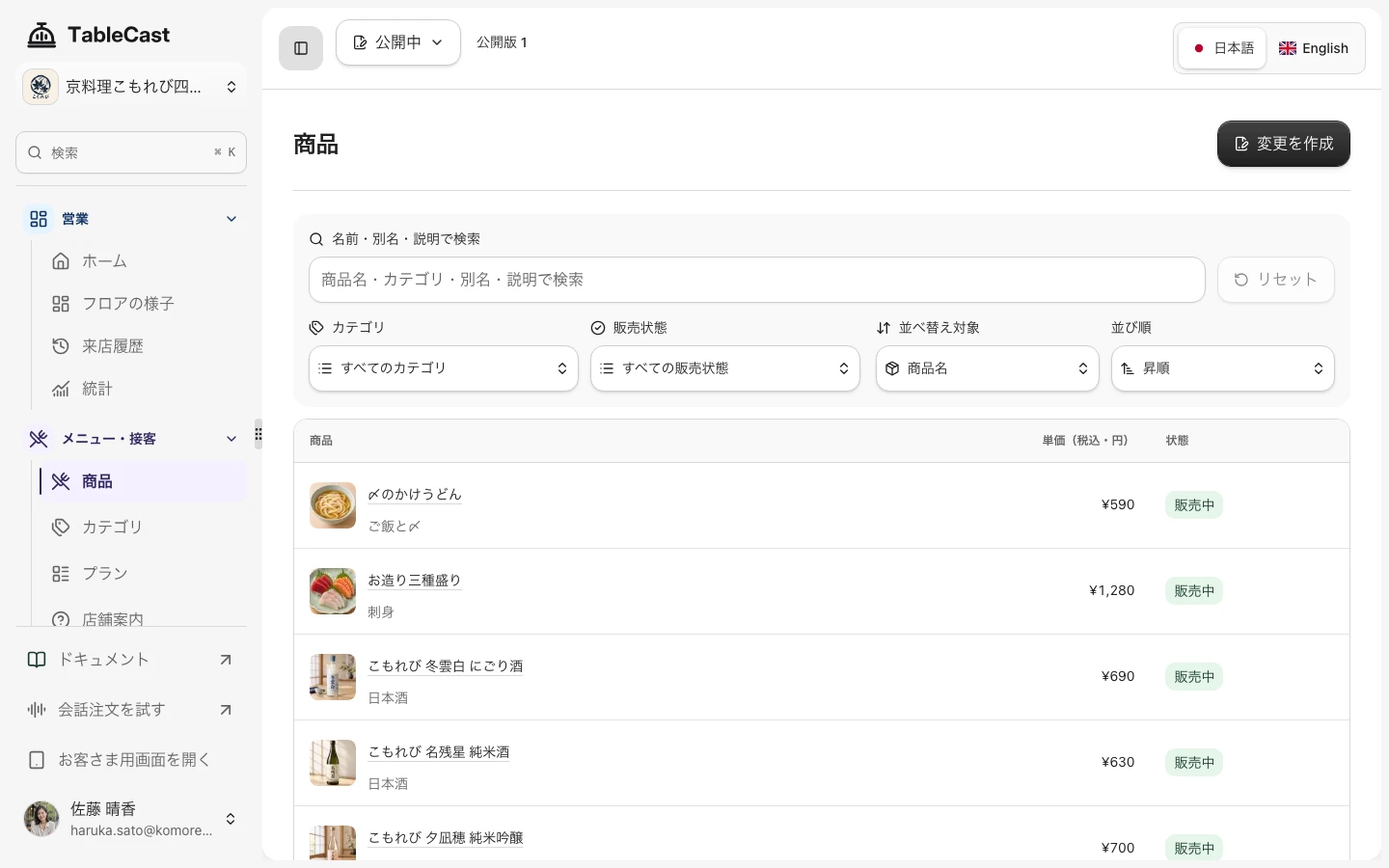
03
The restaurant sees everything live
Tables, orders, serving, payment and staff calls update in real time. Menu drafts are created from ChatGPT through MCP and published after checking the changes. Each store can set multilingual descriptions and service instructions.
All screens are photos of the actual app.
How it works
An order is never decided by what the AI says alone
STEP 1
Discuss and choose
Voice or touch, every order goes through the same API and the same cart.
STEP 2
Save what to confirm
Price calculation and permission checks are handled in the API.
STEP 3
The customer approves
The customer checks the saved contents and approves them.
STEP 4
Confirm exactly once
A mechanism prevents the same order from being registered twice.
Architecture
Cloudflare Workers
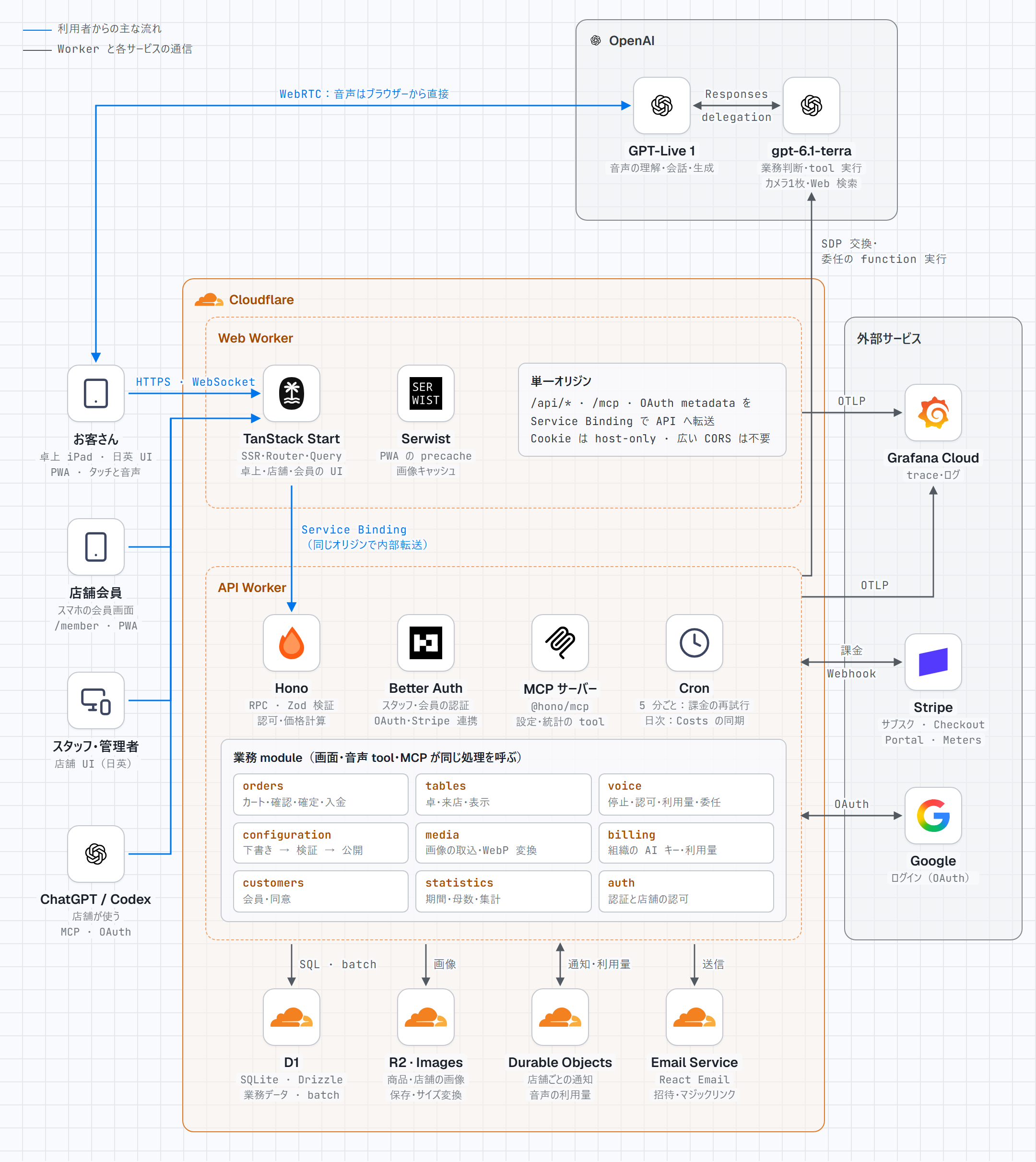
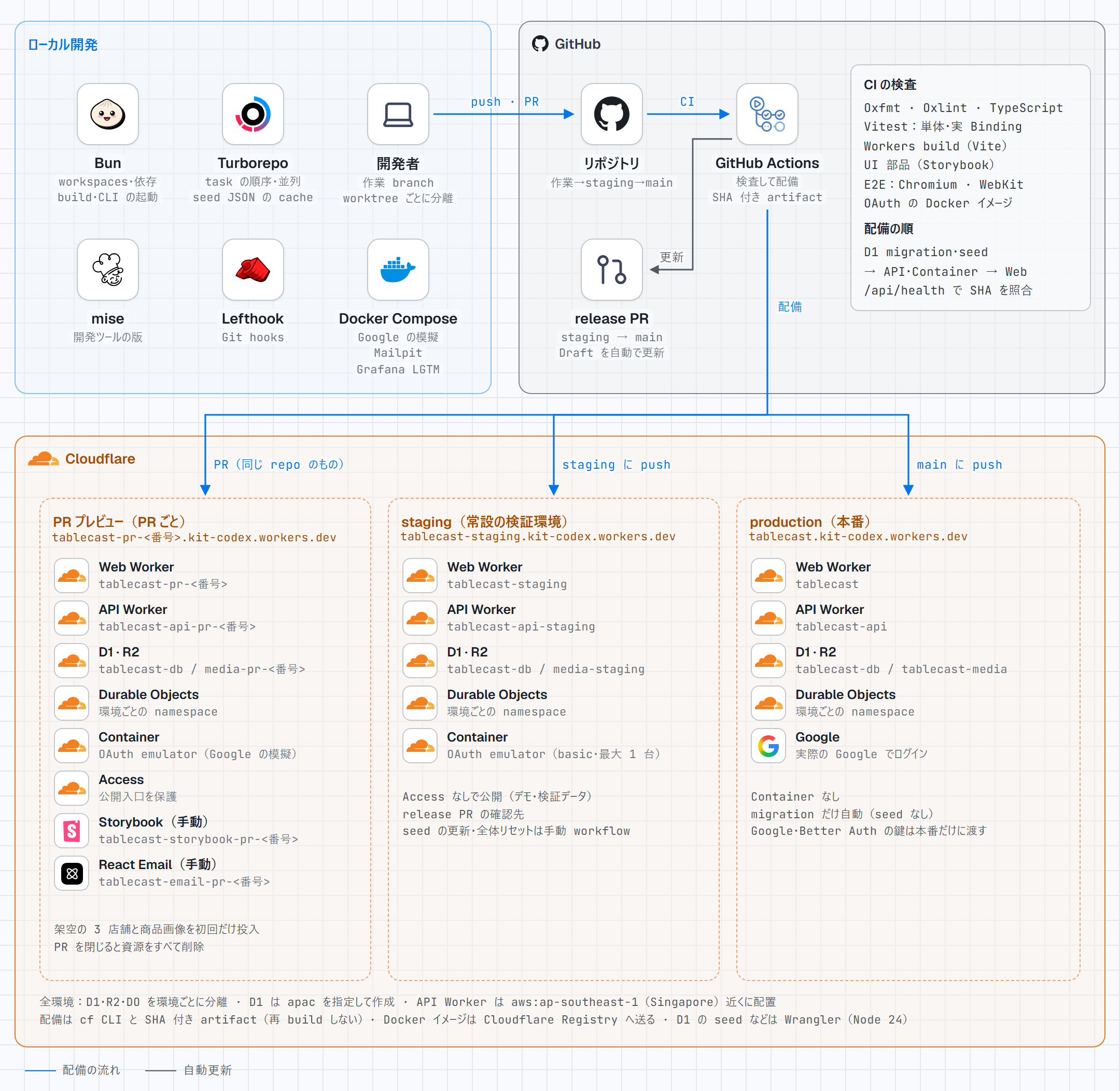
It runs on two Workers: Web, which returns the screens, and API, which handles auth, menus and orders. Web forwards to API through a Service Binding.
D1・R2・Durable Objects
Products and orders are stored in D1 and images in R2. Durable Objects notify the screens when a store or table changes.
GPT-Live 1
The customer's browser connects directly over WebRTC for voice conversation. Business decisions are delegated to another model with Responses delegation.
MCP
Menu drafts are created from ChatGPT or Codex. Publishing needs approval from the person in charge.



Technologies
- TypeScript
- React 19
- TanStack Start・Router・Query・Form
- Tailwind CSS 4
- Hono
- Zod
- Better Auth
- Cloudflare Workers・D1・Durable Objects・R2
- Drizzle ORM
- OpenAI GPT-Live 1(WebRTC)
- MCP
- OpenTelemetry
- Bun
- Turborepo











Architecture diagrams were made with stack-diagram. Logos come from svgl, devicon, gilbarbara/logos, Lucide and each project's official repository, and are trademarks of their owners.